Dental Anatomy & The Real Mechanics of Strike Trauma
Inside the ring, a sharp hook or direct straight punch lands with hundreds of pounds of concentrated kinetic force. While gloves soften external facial cuts, that shockwave travels instantly into the teeth, mandible, and temporomandibular joint (TMJ). Without an engineered barrier, violent impact causes enamel chipping, complete root avulsion (knocked-out teeth), jagged lip lacerations, and comminuted jaw fractures.
The teeth are rigidly embedded within the alveolar bone. When an unshielded punch violently forces the lower jaw upward into the upper arch, the teeth collide like brittle porcelain. A premium mouth guard acts as an elastomeric dampener: it separates the opposing dental arches and redistributes pinpoint concussive pressure evenly across the entire dental perimeter.
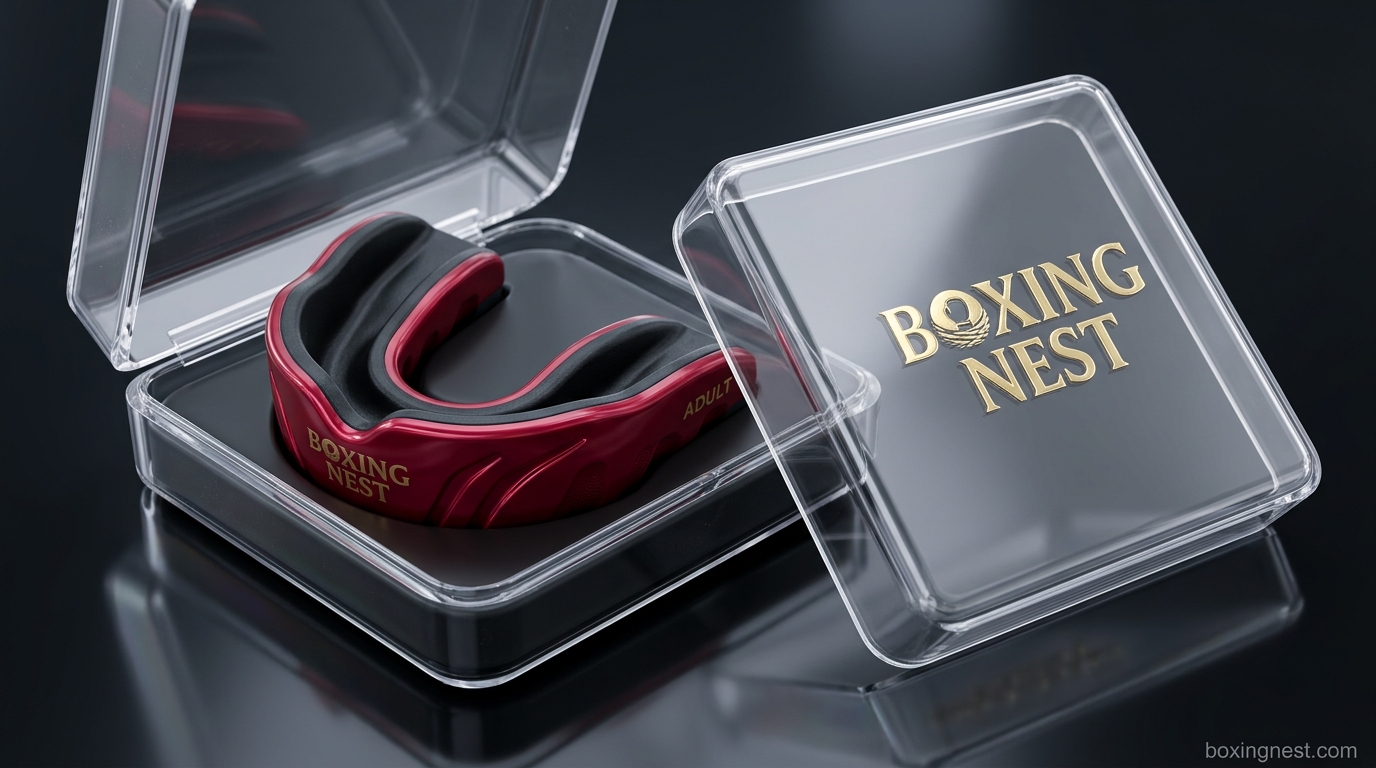
Beyond saving thousands of dollars in emergency orthodontic surgery, a quality mouth guard provides an indispensable psychological anchor. When a boxer bites firmly into custom-molded molar channels, the neck musculature naturally engages, anchoring the cervical spine against whiplash acceleration.
⚡ The Combat Dental Axiom
"You cannot throw leather if your jaw is unhinged." A loose mouthguard forces you to hold it in place with your tongue, starving your lungs of air. A custom-locked guard stays welded to your teeth so you can breathe, bite down, and trade combinations with total focus.
Mouth Guard Types Compared: Stock vs. Boil-and-Bite vs. Custom Dental
Combat dental gear spans three distinct categories, with enormous differences in retention, protection, and breathing ergonomics:
1. Stock Pre-Formed Guards (Department Store)
Sold as universal rubber trays with zero customizable molding. They fit poorly, dislodge immediately upon light impact, and require the fighter to clench their teeth constantly just to keep them in place. They offer minimal impact dampening and are strictly unsuited for full-contact boxing.
2. Advanced Boil-and-Bite Guards (Multi-Layer Thermoplastic)
The gold standard choice for 90% of gym fighters and amateurs. Constructed with a rigid outer exoskeleton and a malleable thermo-gel inner layer. When softened in hot water, the gel molds intimately to your unique teeth topography and gum line, locking in place with vacuum suction while the outer frame dissipates blunt force.
3. Dentist-Fabricated Vacuum Laminate Guards
Created by dental professionals using an exact stone plaster mold of your mouth. They provide the most compact profile and supreme speech clarity, but cost significantly more and require clinical dental appointments.
| Guard Category | Impact Dissipation | Retention & Grip | Breathing Comfort | Cost vs Value |
|---|---|---|---|---|
| Generic Stock Pre-Formed | Poor (Single layer) | Loose (Drops when mouth opens) | Restricted (Choking hazard) | Low Cost / High Danger |
| Dual-Layer Boil-and-Bite | High (Gel core + Rigid Exoskeleton) | Snug (Locks via suction) | High (Integrated Airflow) | Superior Everyday Value |
| Custom Dental Impression | Maximum (Pressure laminated) | Exact Orthodontic Match | Effortless Speech & Air | Premium Investment |

Jaw Stabilization & Concussion Mitigation Science
A frequent topic among sports neurologists is whether mouth guards prevent concussions. While no external device can stop the brain from moving within cerebral spinal fluid during sudden rotational force, a proper mouth guard plays a vital indirect role in reducing concussive amplitude:
- Eliminating the TMJ Gap: Under forceful uppercuts or hook impacts, an open jaw slams the condyle of the mandible directly backward into the temporal bone of the skull, transmitting concussive shock directly to the brain base.
- Mandibular Cushioning: By acting as a thick elastomeric buffer between the upper and lower teeth, the mouth guard absorbs and dampens upward vertical acceleration before it reaches the cranium.
- Reflexive Cervical Bracing: Clenching firmly into molar bite channels reflexively tightens the sternocleidomastoid and trapezius muscles, significantly reducing whiplash head rotation upon impact.
Airflow Channels & Aerobic Endurance Under Fire
In rounds six through ten of an intense sparring war, oxygen intake determines your survival. Boxers operating at peak cardiovascular thresholds need to breathe rapidly through their mouth.
Inferior mouth guards block the oral cavity completely, forcing fighters to open their jaw to gasp for air—a fatal mistake that leaves the jaw slack and prime for a knockout break. Superior combat guards integrate raised molar bite pads with a frontal central airway channel. This allows boxers to draw deep breaths of oxygen while keeping their jaw clenched safely shut.
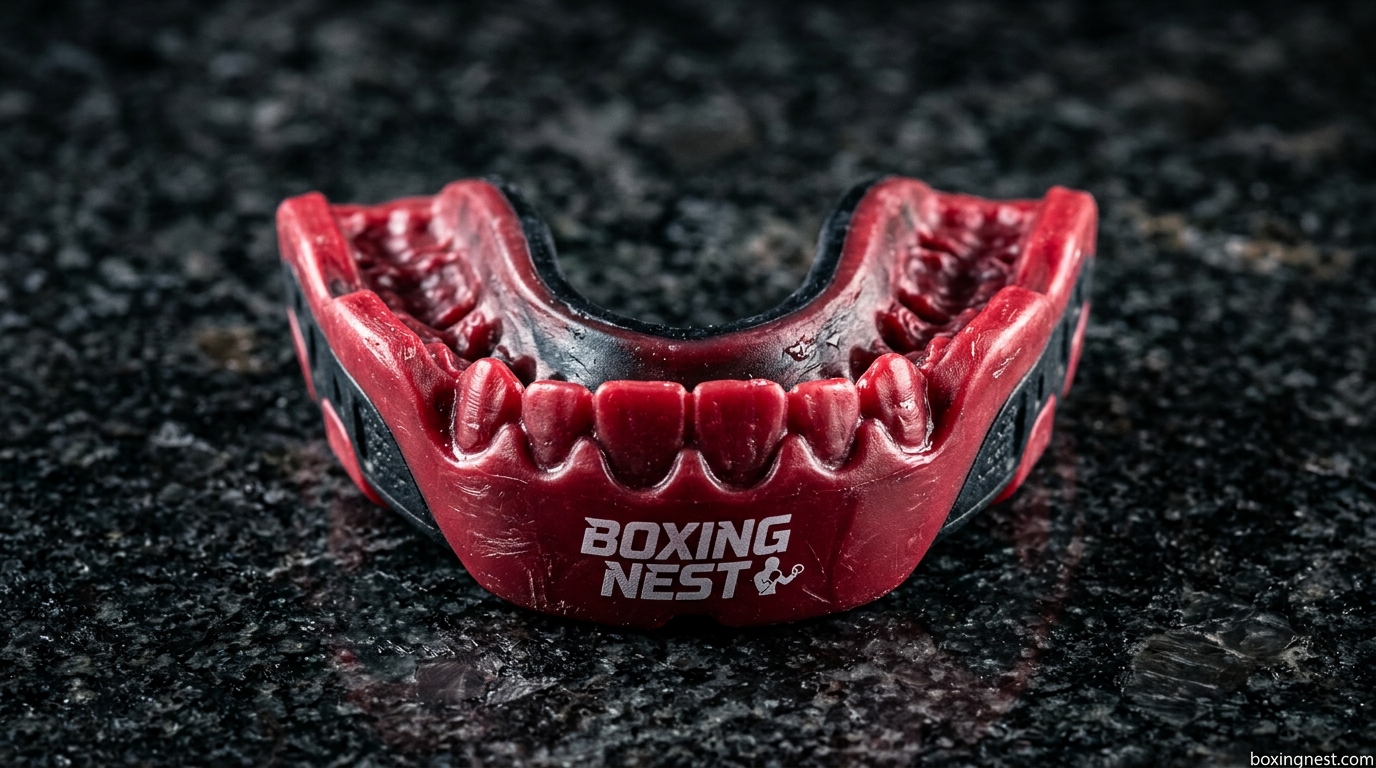
The Perfect Boil-and-Bite Molding Protocol
A boil-and-bite guard is only as effective as the accuracy of your molding process. Follow this battle-tested laboratory protocol:
- Boil Water: Bring a pot of water to a rolling boil, then remove it from the heat source and let it stand for 30 seconds (ideal temp: ~85°C / 185°F).
- Submerge for 45–60 Seconds: Use a slotted spoon to submerge the mouth guard until the internal gel walls become soft and translucent.
- Quick Cold Dip: Plunge the guard into room-temperature water for exactly 1 second to avoid burning your gums.
- Center & Bite Down Firmly: Line up the guard with your front teeth and bite down firmly into the gel bed with your molars. Do not bite through the guard.
- Suck Out Air & Moisture: Create strong vacuum suction by sucking in air and pressing your tongue hard against the roof of your mouth.
- Mold External Walls: Use your thumbs and fingers to massage the outer walls firmly against your upper teeth and gum line.
- Ice Bath Cure: Remove the guard and submerge it in an ice water bath for 3 minutes to freeze the molecular memory permanently.
Single vs. Double Mouthguards: Which is Better?
A common debate is whether to purchase a single (upper arch only) or double (both upper and lower arches) mouthguard:
- Single Mouthguard (Recommended): Covers the entire upper teeth arch. When you close your mouth, your bottom teeth bite into the reinforced underside channels. It allows clear communication with your corner, easy water consumption, and rapid panting. 98% of professional boxers choose single guards.
- Double Mouthguard: Locks both upper and lower jaws into a single block with a small central breathing hole. While it provides extra lower jaw rigidity, it severely restricts airflow, induces claustrophobia during deep fatigue, and makes spitting blood or communicating impossible.
Shield your smile with championship dual-density impact dissipation and custom jaw lock.
🥊 View Precision Molding ProtocolHygiene, Bacteria Prevention & Longevity Care
Because mouth guards reside directly inside your oral cavity, unwashed gear quickly turns into a breeding ground for harmful oral bacteria, plaque, and fungi. Follow these non-negotiable hygiene habits:
- Rinse Immediately: Rinse your mouthguard thoroughly with cool tap water immediately after stepping out of the ring.
- Never Use Hot Water: Hot water will melt and warp the thermo-fit molecular memory, ruining the custom fit.
- Weekly Denture Tablet Soak: Soak your guard once a week in cold water with an antibacterial denture cleansing tablet for 10 minutes to eradicate bacteria.
- Ventilated Antimicrobial Case: Always store your guard in a hard, ventilated protective case like the Boxing Nest antimicrobial container to allow airflow and prevent mold.
- Annual Replacement: Replace your guard every 12 months (or sooner if bite channels show cracks, wear, or thinning).